Why Local Indoor Air Quality Monitoring Is Essential in 2026
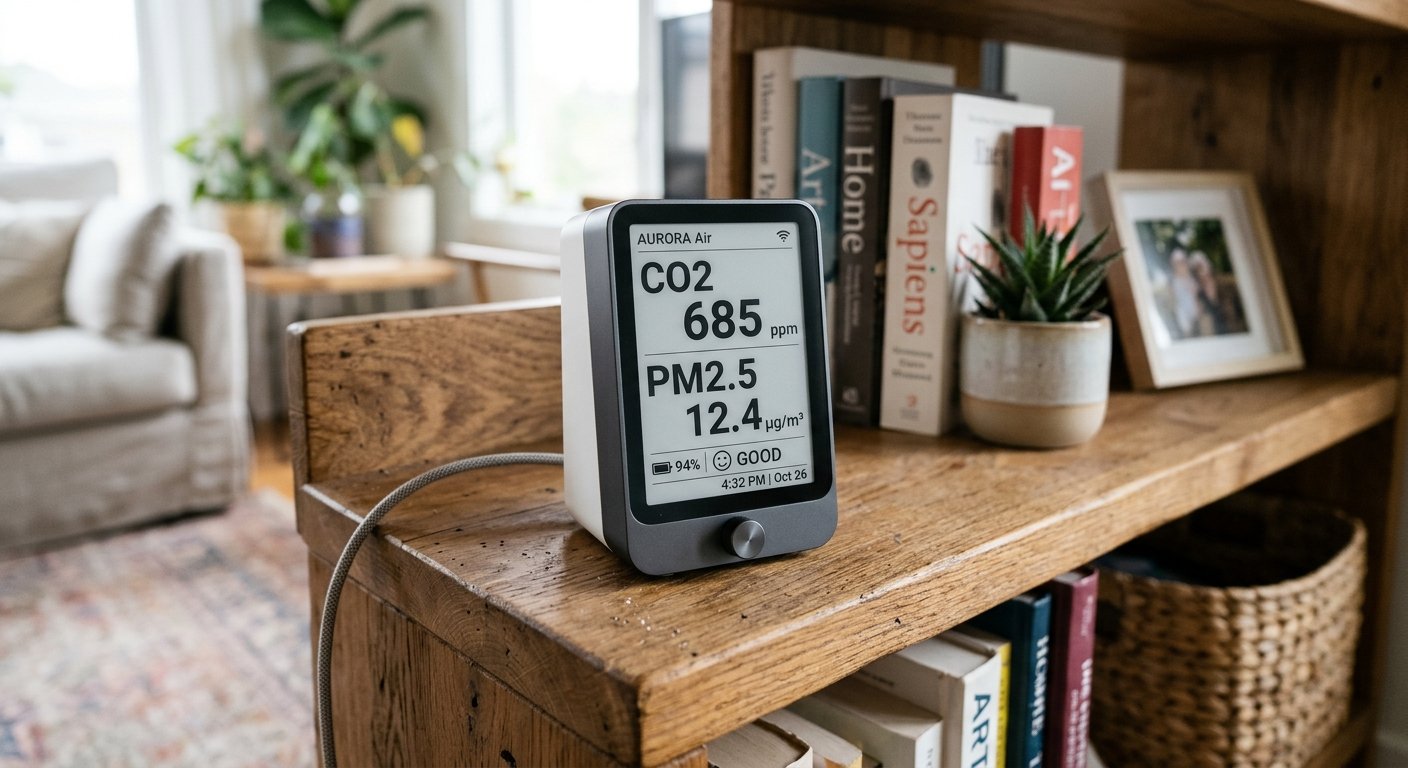
Bottom Line Up Front (BLUF): Upgrading to a smart indoor air quality monitor no subscription device is the ultimate way to safeguard your family’s health and automate home ventilation in 2026. By utilizing local-first protocols like Matter over Thread and onboard NDIR sensors, these modern monitors track carbon dioxide (CO2), fine dust (PM2.5), and volatile organic compounds (VOCs) with zero recurring cloud fees.
Indoor air pollution can often reach levels 2 to 5 times higher than outdoor air due to cooking fumes, cleaning chemicals, pet dander, and poor room ventilation. Traditional air monitors required proprietary cloud accounts or charged monthly subscription fees just to unlock historical trend graphs and automated alerts.
A modern smart indoor air quality monitor no subscription setup eliminates cloud dependence entirely. Equipped with medical-grade non-dispersive infrared (NDIR) sensors and local smart home connectivity, these devices measure indoor contaminants in real time and trigger local ventilation automations without sending your private household data to external servers.
Table of Contents
ToggleKey Benefits of Subscription-Free Air Quality Monitors
- Precise CO2 & Ventilation Tracking: Monitor indoor carbon dioxide spikes above 1,000 ppm that cause brain fog, fatigue, and poor sleep quality.
- Particulate Matter (PM2.5) Detection: Detect microscopic wildfire smoke, dust, and cooking aerosols instantly to protect sensitive lungs.
- Instant Local HVAC Triggers: Create direct local rules (e.g., “When VOCs exceed 300 ppb → Turn on air purifier smart plug”) with sub-100ms response times.
- Complete Household Privacy: Ensure indoor occupancy patterns and air metrics stay encrypted inside your local Matter network.
3 Critical Sensors to Inspect Before Buying an Air Monitor
1. Medical-Grade NDIR CO2 Sensor
Avoid cheap estimated-CO2 (eCO2) algorithms that guess gas levels based on VOCs. Look for dedicated Non-Dispersive Infrared (NDIR) sensors that deliver laboratory-accurate carbon dioxide readings.
2. Laser Optical PM2.5 & PM10 Sensor
Ensure the monitor uses a laser particle counter capable of detecting airborne microscopic dust, pollen, and fine smoke down to 2.5 microns in diameter.
3. Native Matter over Thread Protocol
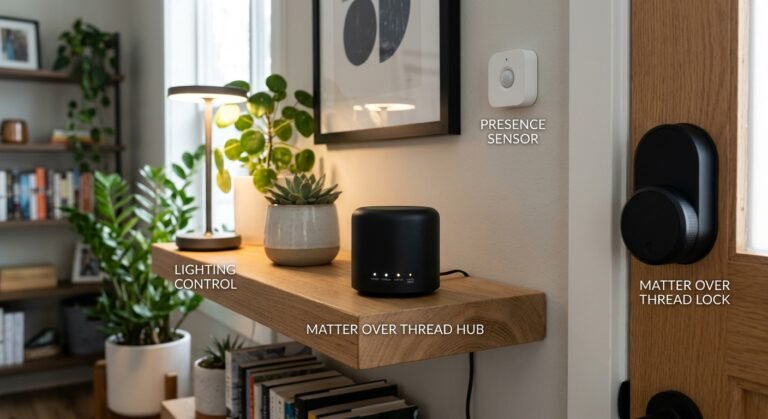
Selecting a smart indoor air quality monitor no subscription unit with Matter over Thread ensures your air metrics sync seamlessly across Apple Home, Google Home, SmartThings, and Home Assistant simultaneously over a fast, local mesh network.
Comparison: Local Matter Air Monitor vs. Legacy Cloud Monitor
| Sensor & System Feature | Local Matter Monitor (No Subscription) | Legacy Cloud Air Monitor |
|---|---|---|
| Data Transmission | Local Thread Mesh / Local API | Vendor Cloud Server (Delayed) |
| Historical Trend Graphs | Free Unlimited Local Storage ($0/mo) | Locked Behind Cloud Subscription |
| Offline Functionality | Triggers purifiers & fans during internet outages | Stops automation rules when internet drops |
| Sensor Accuracy Type | Dual NDIR + Laser PM2.5 | Basic eCO2 Algorithms |
Building a Healthy, Subscription-Free Smart Home
Pairing a smart indoor air quality monitor no subscription sensor with local smart plugs and automatic window actuators creates an intelligent, self-purifying indoor sanctuary. For more hardware evaluations, setup tutorials, and subscription-free security guides, visit our home page at SystemForHome. To learn more about official indoor environmental standards and pollutant thresholds, consult the official EPA Indoor Air Quality Guide.
More Tips for Optimizing Indoor Air Quality
To maximize the performance of your smart air monitor and maintain clean indoor air, implement these practical habits:
- Position at Breathing Level: Place your monitor 3 to 5 feet off the floor near central sitting or sleeping areas, avoiding placement directly adjacent to open windows or cooking stoves.
- Automate Smart Purifiers: Connect standalone HEPA air purifiers to Matter smart plugs configured to activate automatically whenever PM2.5 levels rise above 12 µg/m³.
- Ventilate During Cooking: Run kitchen exhaust hoods and trigger HRV/ERV ventilation fans whenever VOC spikes are detected during meal preparation.
- Calibrate Baseline CO2: Expose fresh outdoor air (400 ppm baseline) to your monitor once a month if your device features manual or automatic NDIR recalibration modes.
How to Set Up Your Air Quality Monitor in 4 Steps
- Power & Mount Device: Plug your monitor into a continuous USB-C power source in your living room or primary bedroom.
- Pair to Local Hub: Scan the Matter QR code using your preferred app (Apple Home, Home Assistant, or Google Home) over your Thread border router.
- Define Target Thresholds: Set baseline comfort limits (e.g., CO2 < 800 ppm, PM2.5 < 10 µg/m³, Humidity 40%–50%).
- Create Fan & Purifier Automations: Link the monitor’s telemetry to turn on local fans, purifiers, or humidifiers automatically when air quality drops.
Frequently Asked Questions
What is the most dangerous indoor air pollutant to monitor?
Both high CO2 (which degrades cognitive function and sleep) and PM2.5 particulates (which enter the bloodstream) pose significant daily health risks, making dual monitoring essential.
Do air quality sensors require filter replacements?
No. Air quality monitors contain electronic laser and optical sensors that measure pollutants without filtering air; only connected HEPA air purifiers require physical filter replacements.
Final Verdict
Adding a smart indoor air quality monitor no subscription unit to your home ecosystem provides vital health protection, instant automated ventilation, and complete privacy without adding monthly cloud fees.