Best Home Security System No Monthly Fee Options in 2026
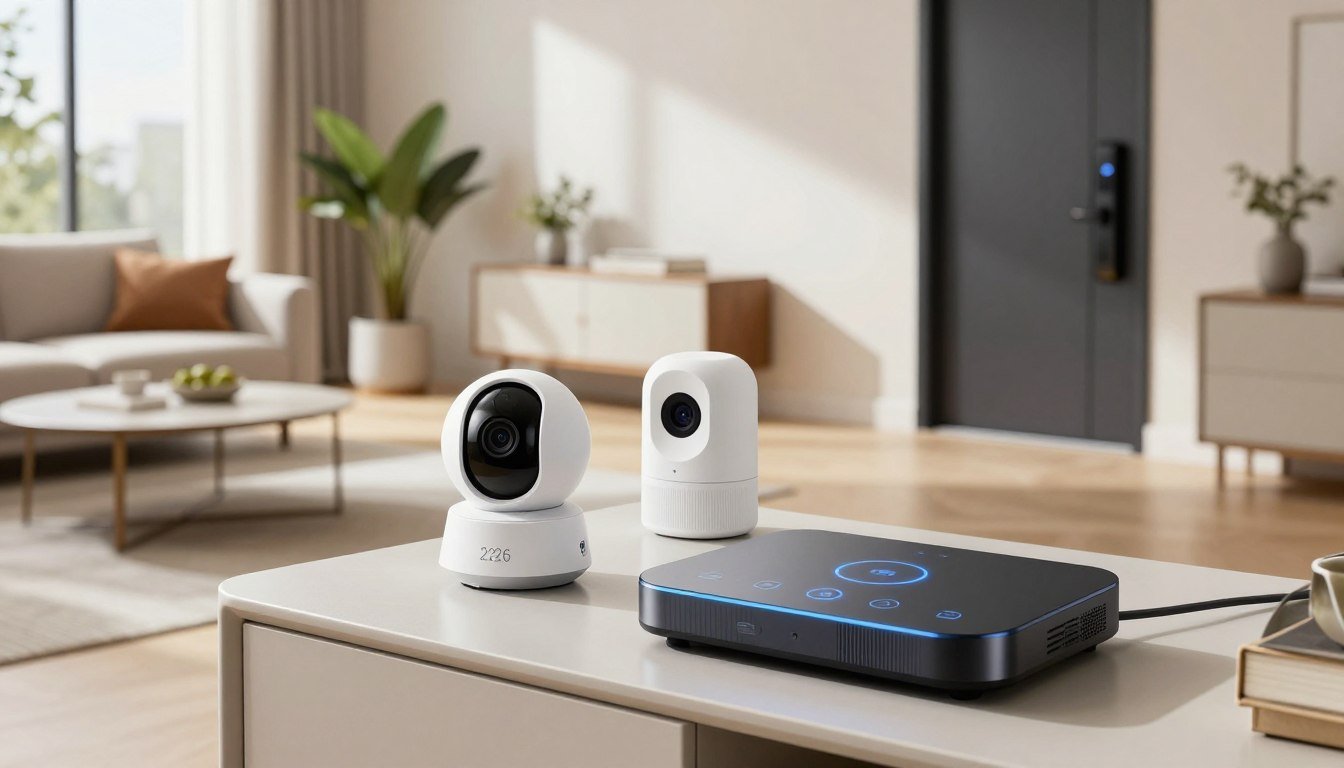
Finding the best home security system no monthly fee setup allows you to protect your home without paying subscription costs. Finding the best home security system no monthly fee setup allows homeowners to save hundreds each year. Modern self-monitored systems and local storage setups deliver high-definition footage, instant smartphone alerts, and full app control with zero subscription fees. Whether you want a simple DIY alarm kit or advanced AI-driven cameras, skipping the monthly bill has never been easier.

We will review top brands, including SimpliSafe, Ring, Abode, Eufy, Reolink, and Wyze. These brands offer different options for local storage and internet use. The right no monthly fee home security setup balances instant alerts against limited professional emergency response. When evaluating video quality, the best home security system no monthly fee cameras should offer clear 2K or 4K resolution.
Key Takeaways
- Self-monitoring saves significant money over long-term contracts.
- Upfront hardware costs are common for subscription-free devices.
- Local storage options keep your video footage private and accessible.
- Internet connectivity remains vital for real-time mobile notifications.
- Professional emergency dispatch is usually absent in free plans.
What Changed for No-Fee Home Security Systems in 2026
If recurring bills bother you, you are not alone in seeking reliable, subscription-free home security. Many U.S. households now value control over professional monitoring. They want home safety without long contracts or monthly fees.
Why Choose the Best Home Security System With No Monthly Fee in 2026?
When comparing options, the best home security system no monthly fee choice should offer reliable local storage and instant mobile alerts. Homeowners want to buy hardware once and avoid the “subscription fatigue” affecting many smart home devices. With the best home security system 2026 has to offer, users can keep data local and avoid cloud privacy concerns.
High-quality local storage options also help users take control. You do not need a monthly plan for instant alerts or live video feeds. This independence appeals to people who prefer hands-on property protection. Finding the best home security system no monthly fee package ensures you won’t be trapped in a long-term service contract.
Key Features to Look For in No-Subscription Security Systems
Many top brands now compete to offer the best home security system no monthly fee model with advanced AI detection. Many brands use a “freemium” model, keeping basic alerts and local sirens free. Advanced features, such as AI-based person detection and extended cloud history, require payment.
This tiered approach keeps core alarm functions available to everyone. Companies often limit cellular backup or professional dispatch to premium plans. These features add value, but a functional no monthly fee home security system does not require them. Always read recent user reviews before buying to verify that the best home security system no monthly fee system delivers reliable performance.
What homeowners should verify before treating a system as truly fee-free
Before choosing a system, look beyond marketing claims. A company may promise no monthly fees, yet hardware upgrades, high-capacity storage cards, or special batteries can cost extra. Transparency is key when measuring ownership costs over several years.
Check whether the system needs a proprietary hub or uses your existing Wi-Fi network. Some systems seem free at first but become limited without extra sensors or bridge devices. Careful research helps keep your setup cost-effective. For small apartments, the best home security system no monthly fee solution might just be a two-camera standalone setup.
How a Home Security System No Monthly Fee Works
Many homeowners are surprised that a robust DIY home security system can work without a recurring bill. A home security system no monthly fee option gives you full control of your property’s safety. It uses hardware that communicates with your devices instead of a remote call center.
Local alarms, self-monitoring, and app notifications
A local alarm system forms the backbone of subscription-free protection. When a sensor triggers, the base station sounds a loud siren to deter intruders. At the same time, it sends a push notification to your smartphone.
This self-monitored home security model makes you responsible for contacting emergency services. After an alert, check your cameras or sensors to verify the threat. Then decide whether to call the police or fire department directly. Smart motion detection is essential when picking the best home security system no monthly fee for outdoor coverage.
Which features continue working without a cloud subscription
Setting up the best home security system no monthly fee requires only a simple DIY installation and home Wi-Fi. You can usually arm and disarm the system, receive motion alerts, and view live video without paying monthly. These features help protect your home against unauthorized entry.
Automation routines often keep working, too. Link your sensors to smart lights or locks to create a deterrent. Stable local networks help these smart home integrations provide value without extra costs.
When professional monitoring, cellular backup, or video storage adds a charge
Basic alerts are free, but some advanced features need a subscription. Companies often charge for professional monitoring, in which a team watches your system 24/7. Cloud video storage for later review is another common paid service.
One-time equipment costs versus recurring service costs
Separate your initial investment from ongoing expenses. You pay upfront for sensors, cameras, and hubs as one-time equipment costs. Recurring service costs apply only when you add features like extended cloud storage or cellular connectivity.
Internet outages, power failures, and cellular fallback
Investing in the best home security system no monthly fee ensures continuous protection without surprise price hikes. If your internet fails, a system without cellular backup may stop sending alerts to your phone. A power failure could also disable the base station without a battery-powered backup.
| Feature | Free Tier | Paid Subscription |
|---|---|---|
| Local Siren | Included | Included |
| Smartphone Alerts | Included | Included |
| Cloud Video Storage | Not Available | Available |
| Professional Monitoring | Not Available | Available |
| Cellular Backup | Limited | Available |
Top Brands for Local Storage and Free Self-Monitoring
Ultimately, choosing the best home security system no monthly fee gives you complete ownership of your security data. Many homeowners choose a SimpliSafe no monthly fee setup to protect their property. It gives you control of your equipment without long-term service contracts.
What SimpliSafe provides without a required monitoring plan
SimpliSafe Base Station, Keypad, Entry Sensor, and Motion Sensor
The SimpliSafe Base Station acts as the brain of your security network. Pair it with a Keypad for manual arming and disarming, Entry Sensors, and Motion Sensors.
These components work well as a local alarm system. When a sensor triggers, the Base Station sounds a powerful siren to deter intruders and alert nearby people.
SimpliSafe indoor and outdoor camera limitations without a subscription
While sensors work independently, cameras have limits without a plan. Without a subscription, you lose cloud video history and advanced AI detection features.
You can view a live feed through the app, but you cannot save clips for later review. Cameras therefore suit real-time viewing better than evidence gathering.
How app alerts, sirens, and local control work for self-monitoring
Effective self-monitored home security depends on responding to notifications. When the system detects activity, it alerts your smartphone, letting you decide whether to call for help.
The local siren provides an immediate warning without relying on internet connectivity. You control system settings through the mobile app, keeping your home protected on your terms.
Who should consider SimpliSafe instead of a professionally monitored package
Strengths for renters and first-time security buyers
This equipment makes an excellent home security system for renters because it needs no drilling or permanent wiring. Move the sensors and Base Station to a new apartment or house when your lease ends.
First-time buyers often value the simplicity of setup. You can install the entire system in under an hour without professional tools or technical expertise.
Trade-offs involving video history and emergency response
The main trade-off is the lack of automatic professional emergency response. If an alarm sounds while you are away from your phone, no third-party service will dispatch police or fire departments.
Without video storage, you must check notifications carefully. If you want immediate professional intervention, self-monitoring requires more active participation than you may prefer.
Ring Alarm for Buyers Who Want Optional Monthly Services
For a flexible setup, Ring Alarm offers free local control and optional paid services. Many homeowners start with a basic system, then add features when ready.
What Ring Alarm equipment can do without Ring Protect
You can run a working security system with Ring Alarm no subscription. The hardware still gives local alerts, even without a monthly plan.
Ring Alarm Base Station, Contact Sensors, Motion Detector, and Keypad
The Base Station serves as your home’s central hub. Place Contact Sensors on doors and windows to detect unauthorized entry. Motion Detectors watch busy areas, and the Keypad arms or disarms the system with a code.
How Ring app alerts and Alexa integrations support no-fee monitoring
A triggered sensor sends instant notifications to your smartphone. These alerts help you track your home’s status in real time. Also, Alexa integration lets you use voice commands to manage security modes.
What changes when Ring Protect is added
The basic setup is useful, but Ring Protect adds more features. It lets you expand security as your needs grow.
Video recording, event history, and snapshot features
A subscription stores your video clips in the cloud, so you can review past events. You also get snapshots that capture images throughout the day. This gives you a clearer view of your property while away.
Professional monitoring and cellular backup considerations
A plan adds professional monitoring, connecting your system to a 24/7 response center. It also adds cellular backup, keeping your system online when home Wi-Fi drops. These features can give busy households greater peace of mind.
Why Ring Alarm may suit households already using Amazon devices
If your home already uses Amazon smart devices, Ring Alarm fits your ecosystem. Its security hardware and smart speakers connect for a unified experience. It suits people who value simplicity and ease of use each day.
| Feature | No Subscription | With Ring Protect |
|---|---|---|
| App Notifications | Included | Included |
| Video Recording | Not Available | Included |
| Professional Monitoring | Not Available | Included |
| Cellular Backup | Not Available | Included |
Abode Smart Security Kits for Flexible Local Automation
For homeowners who love automation, the Abode security system offers a unique path to protection. It provides a strong platform without forcing you into a long-term contract.
How Abode supports self-monitoring without a mandatory subscription
You can enjoy peace of mind with self-monitored home security without monthly fees. The system sends push notifications to your smartphone when sensors are triggered.
Abode Smart Security Kit, Abode Security Hub, and door sensors
The Abode Security Hub forms this setup’s foundation and acts as your home’s brain. The standard kit typically includes the hub and essential door or window sensors. These parts communicate locally, so protection continues during a temporary internet hiccup.
Smart home compatibility with Apple HomeKit, Alexa, and Google Home
Integration is a major strength of this platform. It works smoothly with major ecosystems, including Apple HomeKit, Amazon Alexa, and Google Home. You can easily add security devices to a broader smart home security network.
Abode’s no-fee strengths for customized automation routines
This system’s true power comes from complex automation logic. You can build custom routines that trigger actions based on your daily habits.
Local scenes, entry alerts, and connected lighting
You can create local scenes that turn on lights or adjust thermostats when you arrive home. For example, an entry alert can brighten hallway lights the moment a door sensor trips. This customization makes your home feel more responsive and secure.
Camera storage and advanced integrations that may require a plan
Basic automation is free, but some features require a subscription. Advanced cloud-based camera storage and certain professional integrations require optional paid plans. Check which specific features you need before finalizing your setup.
Which U.S. households should choose Abode over a simpler alarm kit
This system suits tech-savvy users who want a highly personalized environment. If you already own smart bulbs, locks, and plugs, the Abode security system bridges security and home automation. It is ideal for anyone seeking self-monitored home security without sacrificing functionality for simplicity.
Eufy Security Systems for Local Video Storage
Eufy Security offers homeowners an alternative to monthly cloud storage fees. Its hardware stores data on-site, giving users control of recorded footage.
How Eufy Security reduces reliance on recurring cloud fees
This system aims to end ongoing service contracts. Instead of paying monthly to access video history, you buy equipment that stores data at home.
Eufy HomeBase S380 and compatible local storage options
The Eufy HomeBase S380 serves as a central hub for many devices. Users can expand their local video storage capacity by adding a standard hard drive. It can support up to 16TB of data.
eufyCam, Indoor Cam, and Video Doorbell recording considerations
Whether you use the eufyCam, an Indoor Cam, or a Video Doorbell, the system saves clips locally. This helps your home security cameras keep working during a temporary internet outage.

What smart alerts and recordings remain available without a subscription
Skipping a subscription does not remove essential features. Most models include motion-triggered alerts and high-definition recording. The mobile app lets you view live feeds and review past events without hidden costs.
Privacy, encryption, and account security issues buyers should review
Because data stays inside your home, you gain a significant privacy advantage. Eufy uses military-grade encryption to protect files, so only authorized users can view footage. Use strong account security, including two-factor authentication, to protect your local system.
Important trade-offs involving hardware cost, storage capacity, and AI features
You save on monthly bills, but quality hardware may require a larger upfront investment. You also manage storage, including physical security and device maintenance. Some advanced AI features may be limited compared with cloud-based competitors, so check each model before buying.
Best Home Security System No Monthly Fee Guide for 2026
Reolink security cameras offer professional-grade monitoring without subscription plans. Traditional alarm companies often require monthly contracts, but these devices let you manage your surveillance network.
Why Reolink is different from a traditional whole-home alarm system
These cameras provide visual monitoring, not a complete intrusion detection system. They offer strong situational awareness, but usually do not alert a central monitoring station or dispatch emergency services automatically.
Reolink Argus 4 Pro, TrackMix PoE, and RLN8-410 recorder roles
The hardware lineup offers flexible choices for different property areas. The Argus 4 Pro offers a wire-free, 180-degree view. The TrackMix PoE uses dual lenses to zoom in on moving subjects. For central management, the RLN8-410 network video recorder serves as your system’s brain and stores all footage in one place.
Local recording, person detection, and mobile alerts without monthly payments
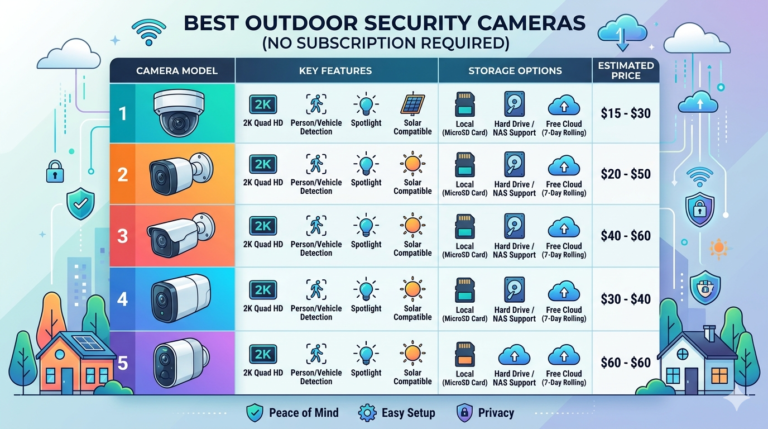
A key benefit of this brand is local video storage. You can save footage to a microSD card or dedicated hard drive, keeping data private and accessible without cloud fees. Person, vehicle, and pet detection works on the device and sends instant mobile alerts to your phone.
Where Reolink works best for driveways, yards, garages, and outbuildings
These home security cameras work well outdoors, where you need to watch busy areas. They are especially useful for:
- Monitoring driveways for package deliveries or unexpected visitors.
- Watching over detached garages or sheds that lack traditional wiring.
- Keeping a clear view of large backyard spaces.
- Tracking activity near side gates and entry points.
Why camera-only protection may not replace door and window sensors
Visual coverage matters, but cameras have limits that dedicated security sensors do not. A camera might miss a silent entry if an intruder stays outside its view or moves too quickly. For maximum safety, consider these points:
Cameras are reactive tools that provide evidence and alerts, while door and window sensors immediately report a physical breach. If you rely only on video, you may not receive an alert until someone is inside your home. For best results, many users combine these cameras with traditional contact sensors for truly layered defense.
Wyze Home Security Components and Their Subscription Boundaries
Wyze home security offers affordable hardware that works well without required monthly fees. Users can build a system one piece at a time. Whether you need motion detection or a full alarm setup, it offers a highly accessible path to subscription-free home security.
What Wyze entry sensors, keypad controls, and cameras offer independently
The Wyze system uses modular parts that connect directly to a central hub. Entry sensors and keypads protect your perimeter without monthly service fees. They send instant local alerts when doors or windows open, so you know about activity right away.
Wyze Cam v4 and Wyze Video Doorbell capabilities without Cam Plus
The Wyze Cam v4 and the Wyze Video Doorbell remain useful without a Cam Plus subscription. The app provides live feeds, motion notifications, and two-way audio. Paid plans offer advanced AI features, but essential monitoring functions remain free.
How local microSD recording differs from cloud event storage
Wyze supports local microSD cards, so you can store footage without relying on the cloud. You can record continuously or after motion triggers, while cloud event storage needs subscriptions for longer clips or AI-detected events. Local storage is a smart way to protect privacy while keeping home security cameras functional for free.
Which alerts and detection features are limited by optional subscriptions
Basic motion alerts are free, but Cam Plus limits some advanced detection features. These include person, package, vehicle, and pet detection, which can reduce false alarms. If object recognition helps filter notifications, a subscription may add value each day.
When Wyze is a practical low-cost choice and when it is not
Wyze suits budget-conscious homeowners who want to monitor certain areas or manage basic entry points. It works best for people comfortable with DIY setups and local storage management. Owners of large properties needing professional monitoring services and fail-safe protection may need a robust, dedicated solution.
| Feature | Free Tier | Cam Plus (Paid) |
|---|---|---|
| Live Streaming | Included | Included |
| Local microSD Recording | Supported | Supported |
| AI Object Detection | Limited | Full Access |
| Cloud Event Storage | 12-second clips | Full length |
Smart Alerts That Matter More Than a Long Feature List
When choosing a local alarm system, notification quality often matters more than many features. Too many irrelevant pings can cause “alert fatigue” and make you miss real emergencies. Effective communication connects a possible threat with a fast response.

Entry, motion, glass-break, smoke, and water-leak notifications
Reliable smart security alerts should focus on immediate threats to your property. Entry sensors on doors and windows offer the first defense; glass-break sensors protect against forced entry. Integrating smoke and water-leak detectors monitors environmental hazards while you are away.
Person, pet, vehicle, and package detection in everyday use
Modern smart home security uses AI to separate normal activity from intruders. Identifying a person, pet, or delivery vehicle helps you stay informed without constant interruptions. This detail helps you focus on events needing your attention.
How alert speed, accuracy, and customization affect response time
The speed at which a notification reaches your phone is critical during an emergency. System lag costs seconds needed to contact authorities or check your live feed. Customization lets you set parameters, so your smart home security setup works as needed.
Reducing false alarms from pets, deliveries, and neighborhood activity
You can reduce false alarms by adjusting motion sensitivity zones. Many systems let you mask busy sidewalks or swaying tree branches that trigger needless alerts. Fine-tuning these settings ensures your local alarm system alerts you only when something important occurs.
Creating separate alerts for household members and trusted contacts
Customizing alerts for different users adds convenience and safety. You can notify yourself when children arrive home from school or a trusted neighbor checks your property. This precise control helps manage your household’s security with greater precision and less stress.
Why a loud local siren still matters when phone notifications fail
Even with strong digital tools, technology can fail. A phone might be muted, misplaced, or have a dead battery, leaving you unaware of a triggered sensor. A loud local siren provides vital backup and alerts you and your neighbors immediately, despite internet or mobile device problems.
Installation, Internet Dependence, and Daily Reliability
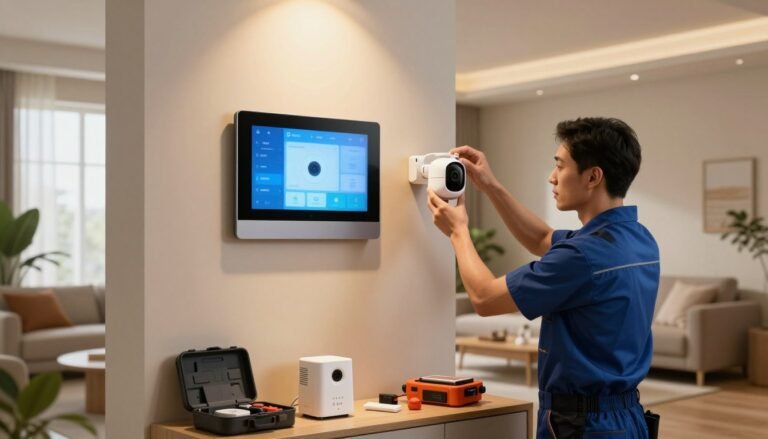
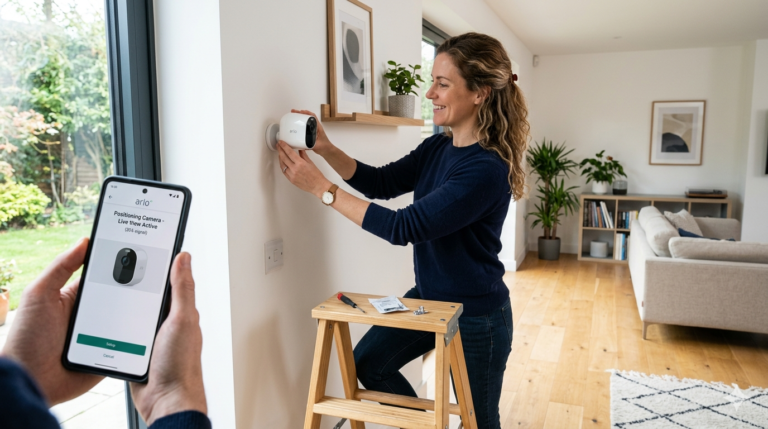
Homeowners and renters both need careful installation for lasting security. A DIY home security system offers flexibility, but careful planning must protect every corner of your property.
Choosing between wireless DIY installation and wired camera systems
Wireless systems remove the need to drill holes or run cables through walls. These kits suit people who want a fast setup without professional help. Wired camera systems offer a permanent, interference-free connection that does not rely on battery life.
Wired setups offer unmatched stability, but they often need professional installation or advanced technical skills. Most modern users prefer wireless parts that communicate through encrypted radio frequencies.
Placement guidance for entry doors, windows, hallways, and exterior zones
Strategic placement forms the backbone of an effective security plan. Prioritize busy areas and vulnerable entry points to maximize your coverage.
- Entry Doors: Place sensors on all main and side doors to detect unauthorized opening.
- Windows: Use contact sensors on ground-floor windows, especially those hidden from street view.
- Hallways: Position motion detectors to cover the main paths an intruder would take to reach bedrooms.
- Exterior Zones: Mount cameras at eye level near driveways and porches to capture clear facial details.
Battery replacement, solar charging, and power-outage preparation
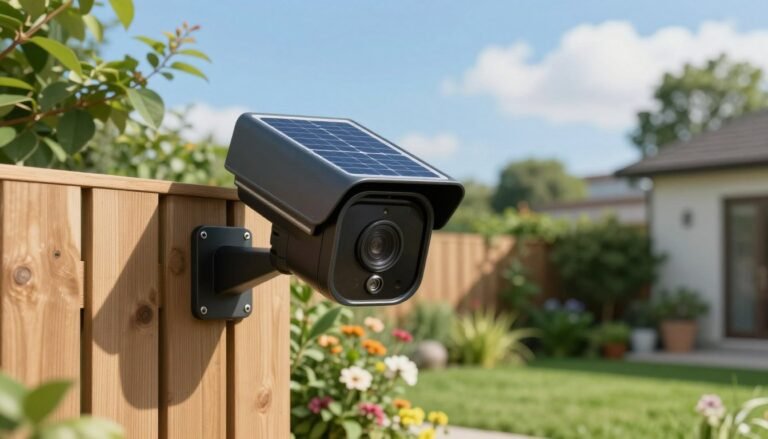
Even the best systems can fail during a storm if they lose power. A cellular backup module keeps your system connected to the monitoring center when home Wi-Fi goes down. For outdoor cameras, solar panels are a game-changer because they keep batteries charged without frequent manual charging.
Using battery backups for routers, hubs, and network video recorders
Your security hub is the system’s brain, so it needs constant power. Connect your router and hub to an Uninterruptible Power Supply (UPS) for protection during outages. This keeps cameras recording and sensors active when the grid fails.
Testing alarms and notifications after installation
Never assume your system works just because its lights are on. Trigger the sensors manually to confirm your smart security alerts reach your phone in real-time. Testing your system regularly ensures your siren sounds and app notifications trigger as expected.
How renters and homeowners differ in equipment and mounting requirements
Choosing the right home security system for renters means focusing on non-permanent solutions. Renters should choose adhesive-backed sensors and cameras that need no drilling into walls or door frames. These systems are easy to remove and take to a new apartment.
Homeowners can install permanent, hardwired systems that connect directly to the house. Homeowners may prefer screws and conduit, while renters benefit from the portability of peel-and-stick hardware. Whatever your home type, verify that your equipment meets your lease or property requirements.
How to Choose the Right No-Fee Setup for Your Home
Choosing the right home security system no monthly fee means matching your lifestyle with your hardware budget. Consider your property’s layout, your technical skills, and the maintenance you can handle.
Best fit for renters: SimpliSafe and Ring Alarm
Renters often need portable equipment that requires no wall drilling. SimpliSafe no monthly fee options use simple, peel-and-stick installation, which suits apartments. Ring Alarm no subscription setups offer flexibility for frequent movers and a reliable, user-friendly interface.
Best fit for smart-home automation: Abode
If you enjoy building complex routines, the Abode security system is a top choice. It works with many smart-home platforms, letting you trigger lights or locks from sensor activity. This platform suits users who want a customized, subscription-free home security experience.
Best fit for local video storage: Eufy Security and Reolink
For privacy, Eufy Security and Reolink security cameras are industry leaders. Both brands offer local video storage, so footage stays on your hardware instead of the cloud. This setup removes recurring fees and keeps your data under your control.
Best fit for budget-conscious camera coverage: Wyze
When you need wide coverage on a tight budget, Wyze home security components are hard to beat. Affordable cameras and sensors make it easy to monitor multiple rooms or entry points. Some advanced features require payment, but the core functions remain strong for the price.
Questions to ask before buying any subscription-free security system
Before buying, consider how the system handles real-world emergencies. You should feel confident managing the hardware without constant support.
Does it keep working during an internet outage?
Check whether your system has a local siren or cellular backup. Wi-Fi-only systems may leave you vulnerable when your connection drops.
Can recordings be accessed without a cloud plan?
Confirm that the hardware supports microSD cards or local network storage. This lets you review footage even when the internet is down.
Are replacement batteries, storage cards, and extra sensors affordable?
Long-term costs can rise quickly. Choose systems that use standard batteries and affordable, widely available storage media.
What happens if the homeowner misses an emergency alert?
Consider whether you need professional monitoring for peace of mind. Self-monitoring works well, but paid service can help when you cannot respond.
| Brand | Primary Strength | Best For |
|---|---|---|
| SimpliSafe | Ease of Use | Renters |
| Abode | Automation | Smart Homes |
| Eufy | Local Storage | Privacy |
| Wyze | Affordability | Budget Users |
Conclusion
Finding the right no monthly fee home security setup means matching your lifestyle needs with modern hardware. Choose local video storage from Eufy Security and Reolink, or Abode’s smart automation routines, based on your daily habits.
The best home security system 2026 offers for your property depends on how much control you want over your data. SimpliSafe and Ring Alarm provide excellent entry-level options for people who prefer self-monitoring, while Wyze offers practical, budget-conscious camera coverage.
Before buying, verify your home internet resilience and power backup plans. Reliable protection depends on more than equipment. Your system must handle local alerts and emergency scenarios without a cloud subscription.
Evaluate recording access and equipment costs for your preferred brand. Choose a no monthly fee home security solution that matches your protection needs. A tailored approach can keep your family safe, protect your budget, and bring peace of mind without recurring bills.
FAQ
Can I truly use a home security system with no monthly fee in 2026?
Yes, you can use one. Brands like SimpliSafe, Ring Alarm, and Abode offer hardware-first options. These systems support local sirens and basic app alerts without a recurring subscription. However, “no monthly fee” means you handle self-monitoring and equipment costs, including storage cards and replacement batteries.
What features do I lose if I don’t subscribe to a plan with SimpliSafe or Ring?
Skipping monthly plans usually removes professional monitoring and cellular backup. The SimpliSafe Base Station and Keypad still sound a loud local siren, but cannot call emergency services automatically. With Ring Alarm, you still get Ring app alerts, but Ring Protect features, including video recording and event history, require a plan.
How does local video storage work with Eufy Security and Reolink?
These systems keep your data off the cloud and under your control. The Eufy HomeBase S380 saves footage directly to the device. Reolink uses the RLN8-410 recorder or microSD recording on cameras like the Argus 4 Pro. You can access smart alerts and person detection recordings without paying monthly storage fees.
Will my no-fee security system work during an internet outage or power failure?
It depends on the hardware. Most systems still trigger local alarms if a Contact Sensor or Motion Detector is tripped, but you won’t receive smartphone notifications without an active connection. Many homeowners use battery backups for routers and Abode Security Hubs, or choose cameras with solar charging for power failures.
Does Abode support smart home automation without a mandatory subscription?
Yes, the Abode Smart Security Kit supports smart-home automation with Apple HomeKit, Alexa, and Google Home out of the box. You can create local scenes, such as turning on connected lighting when an entry sensor is triggered, without a monthly commitment. However, advanced integrations and long-term camera storage may eventually require a plan.
Is the Wyze Cam v4 a good option for budget-conscious property monitoring?
A: Wyze is an excellent low-cost choice for people who want entry sensors and keypad controls on a tight budget. Features like cloud event storage and advanced AI detection are often locked behind a Cam Plus subscription. However, you can use a microSD card in the Wyze Cam v4 or Wyze Video Doorbell to record video locally for free.
What kind of smart alerts should I expect from a self-monitored system?
A modern system can provide many smart alerts, including glass-break, smoke, and water-leak notifications. Many 2026 models from Eufy and Reolink also feature specialized person, pet, vehicle, and package detection. These tools help reduce false alarms from neighborhood activity, so a phone buzz signals an event that matters.
Is DIY installation difficult for these no-fee systems?
Not at all! Most brands support wireless DIY installation, making them ideal for renters and first-time buyers. You can easily mount entry doors sensors and hallway motion detectors without permanent drilling.Reolink also offers TrackMix PoE options for those who prefer a stable, wired camera system for exterior zones like driveways and garages.